Technology Trends Shaping a More Sustainable Future
Water Management in Florida: Technology Trends & Solutions
Water Management in Florida: Technology Trends Shaping a More Sustainable Future. Managing water efficiently on a global scale is one of the most important challenges of our time, especially in the context of climate change, population growth, and the resulting increase in industrial water demand.
As freshwater resources become increasingly strained, availability has a growing influence on how water is consumed and managed. At the same time, demand continues to rise, creating challenges that could become increasingly difficult for communities, industries, and governments to address.
However, digital transformation, artificial intelligence, and advanced water technologies are opening new opportunities for more precise and efficient water management. These innovations are helping organizations improve industrial water efficiency, optimize infrastructure, reduce waste, and develop more sustainable approaches to water use.
Industries across virtually every sector are undergoing an unprecedented modernization process. From water management for irrigation to the automation of basic operations and sophisticated areas such as cybersecurity, public and private organizations are investing in technologies designed to prevent water shortages, improve wastewater treatment, expand water reuse, and enhance the treatment of saline water.
For businesses, utilities, municipalities, developers, and agricultural operations in Florida, these solutions are particularly relevant. Water reuse is already an important component of the state’s water resource, wastewater, and ecosystem management strategies, helping reduce pressure on traditional water sources while supporting long-term water availability.
Below, we explore some of the most important water technology trends emerging since 2025, with a focus on modernization, resilience, efficiency, and sustainable water management.
Water Management Technologies Transforming the Industry. Water Management in Florida: Technology Trends Shaping a More Sustainable Future
Onsite and Decentralized Water Reuse Systems
Greater Water Efficiency and Operational Independence
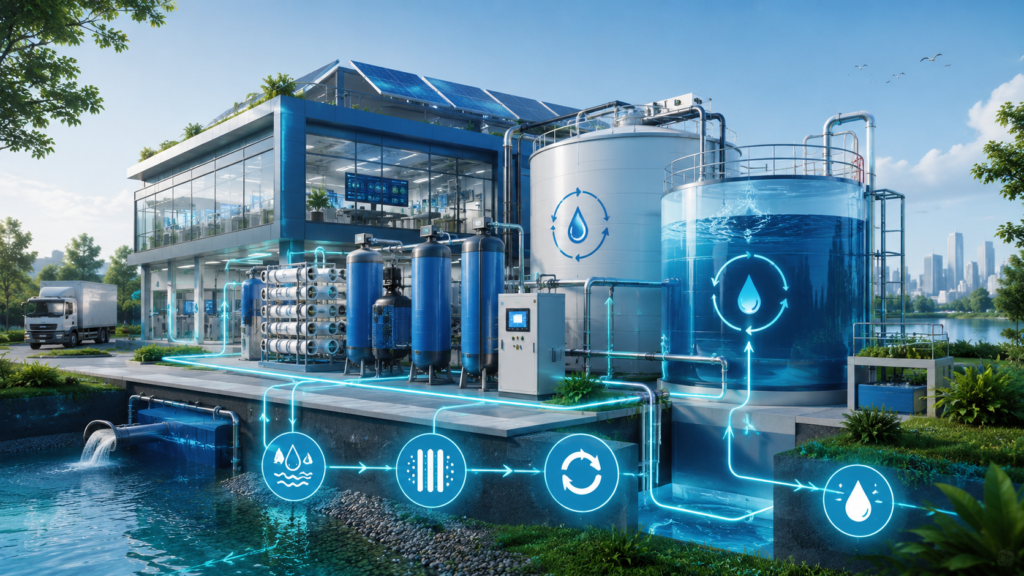
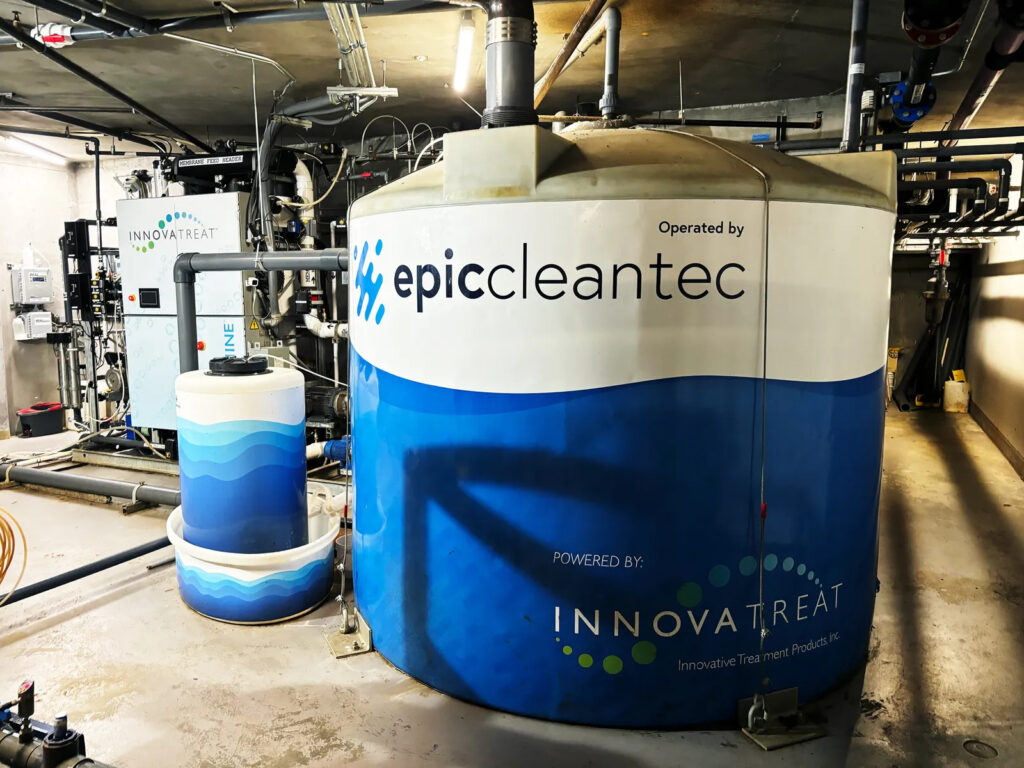
Technology companies, industrial facilities, commercial properties, and other organizations are increasingly exploring onsite and decentralized water reuse systems as a strategy to improve water efficiency, reduce operating costs, and decrease dependence on external water supplies.
These systems make it possible to treat, recover, and reuse water directly at or near the location where it is generated or consumed, reducing unnecessary transportation and allowing organizations to make better use of available water resources.
The EPA defines onsite non-potable water reuse systems as systems capable of collecting and treating sources such as wastewater, greywater, stormwater, and roof-collected rainwater for appropriate non-drinking applications.
Reducing Water Consumption and Waste
Technology Trends Shaping a More Sustainable Future
Implementing decentralized water treatment systems can support more sustainable water management by allowing treated water to be reused across different processes while reducing demand for potable water.
Depending on the application and treatment requirements, reused water can support activities such as irrigation, cooling, toilet flushing, commercial operations, and other non-potable uses.
In addition to reducing water waste, this approach can strengthen an organization’s water independence and resilience, lower its environmental impact, and help create more efficient and sustainable operations.
For Florida, where reclaimed water already plays a significant role in water resource management, expanding efficient reuse technologies represents an important opportunity for businesses, communities, and infrastructure projects.
Water Management in Florida: Green Infrastructure and Advanced Water Treatment Technologies
Sustainable Solutions for Better Water Management
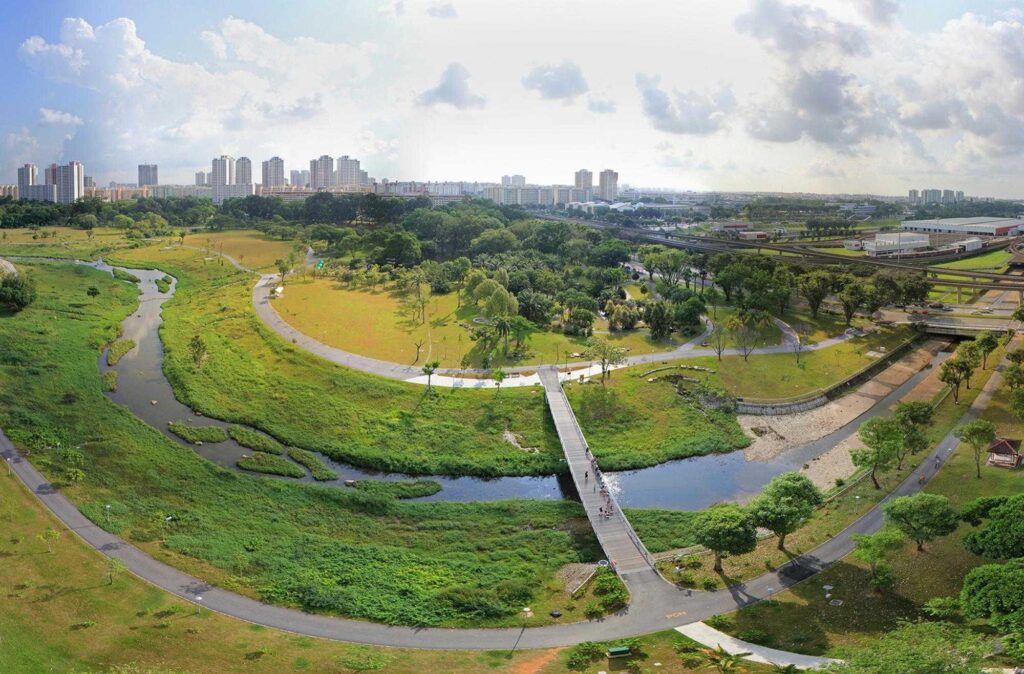
Green infrastructure: Bishan–Ang Mo Kio Park / Kallang River, en Singapur.
The combination of green infrastructure, nature-based solutions, and advanced water treatment technologies is becoming increasingly important in sustainable water resource management.
These strategies can improve water capture, filtration, treatment, and reuse while helping reduce the environmental impact associated with urban, commercial, agricultural, and industrial activities.
Natural Filtration and Advanced Purification Technologies
Green infrastructure, including constructed wetlands, rain gardens, permeable surfaces, and green roofs, can support the absorption, retention, and natural filtration of water, helping communities and facilities manage rainfall and available water resources more effectively.
At the same time, advanced technologies such as reverse osmosis, membrane filtration, and other water purification systems can remove contaminants and significantly improve water quality, making water recovery and reuse possible across a wider range of applications.
Combining natural infrastructure with advanced treatment technologies can help create water treatment systems that are more efficient, resilient, and sustainable.
This integrated approach is particularly relevant for organizations looking to strengthen water conservation in Florida while preparing infrastructure for changing environmental and operational conditions.
Digital Twins for Smart Water Management
Real-Time Simulation, Monitoring, and Optimization
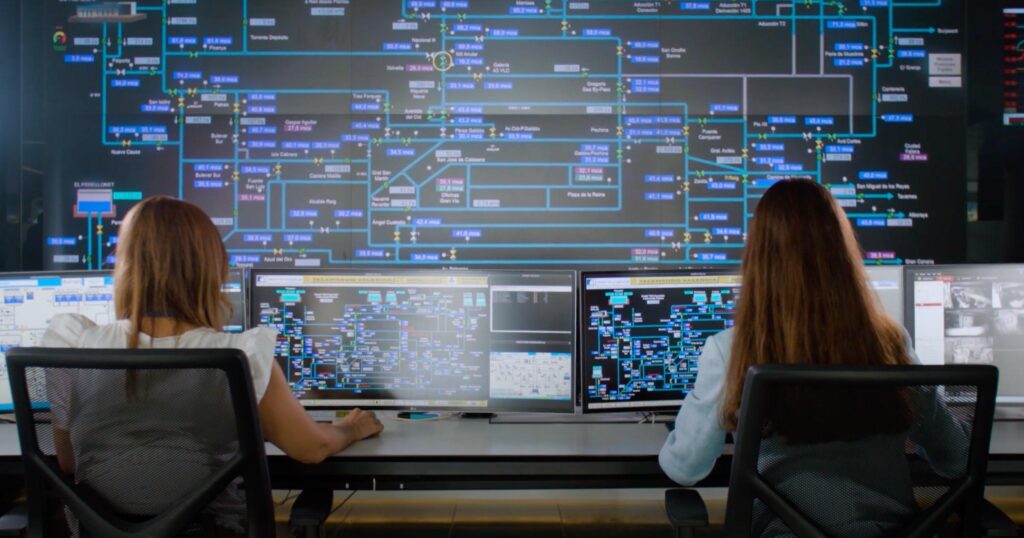
Digital twins are becoming a powerful technology for improving smart water management.
A digital twin creates a virtual representation of a physical system, such as a water distribution network, wastewater treatment plant, pumping system, industrial water process, or other water infrastructure.
By using simulations and operational data, organizations can evaluate different scenarios, anticipate potential problems, and make data-driven decisions before implementing changes to physical infrastructure.
Key Applications of Digital Twins in Water Management
Digital twins can help organizations:
- Simulate water distribution networks and treatment systems before making physical infrastructure changes.
- Collect and analyze real-time operational data to adjust processes, reduce water losses, and improve efficiency.
- Predict the potential impact of extreme weather events, changes in water demand, or infrastructure failures.
- Support predictive maintenance and early detection of anomalies.
- Improve asset management and infrastructure planning.
- Optimize energy and water consumption across treatment and distribution processes.
Building a More Resilient Water Industry
The integration of digital twins into water management is helping drive the industry toward smarter, more efficient, and more sustainable operating models.
Read more about Water Management in Florida: Technology Trends Shaping a More Sustainable Future in:
https://archive.org/details/watertechnologyi0000gray_k0e5
Combined with sensors, automation, data analytics, and artificial intelligence, these technologies can help organizations optimize resource use, monitor water quality, and respond faster to changes in demand or adverse environmental conditions.
For utilities, industries, and infrastructure operators, the result is the potential for a more resilient and sustainable approach to water management over the long term.
Sustainability and Water Management Across the Supply Chain
Responsible Water Use as a Business Priority
Responsible water use has become an increasingly strategic issue across global supply chains.
Organizations are looking for ways to reduce their water footprint, optimize resource consumption, improve wastewater management, and implement practices that support more sustainable business operations.
This transformation is being driven not only by environmental concerns but also by the need to maintain reliable access to water for industrial, agricultural, manufacturing, commercial, and logistics operations.
For companies operating in Florida, incorporating water efficiency and water conservation strategies into business planning can also support stronger long-term resilience.
What Is Driving More Sustainable Water Management?
Several factors are accelerating the transition toward more sustainable water management.
Consumer expectations are changing as customers increasingly consider environmental responsibility and the efficient use of natural resources when evaluating companies and brands.
Environmental regulations and water management requirements are also encouraging organizations to improve processes, monitor consumption, reduce unnecessary water use, and establish more effective water management strategies.
At the same time, increasing pressure on water resources is pushing organizations to identify solutions that reduce waste, increase water reuse, diversify available water sources, and strengthen operational continuity.
Building More Resilient Supply Chains
Integrating sustainable water management into supply chain strategies can provide benefits beyond reducing environmental impact.
Water efficiency initiatives can help companies reduce operational risks, optimize resource consumption, improve infrastructure performance, and increase resilience when water availability becomes more uncertain.
Technologies such as onsite water reuse systems, reclaimed water solutions, smart sensors, digital twins, membrane filtration, reverse osmosis, green infrastructure, and AI-powered water management systems are creating new opportunities for businesses to rethink how water is used, treated, recovered, and managed.
The Future of Water Management in Florida
The future of water management will depend on the ability of organizations to combine technology, sustainability, data, and resilient infrastructure.
In Florida, water reuse is already an established component of water resource management. The Florida Department of Environmental Protection reports that approximately 958 million gallons per day of reclaimed water were beneficially reused in 2024, demonstrating the significant role reuse already plays within the state.
The next stage of this transformation will increasingly involve smarter infrastructure, decentralized treatment, advanced purification technologies, digital monitoring, predictive analytics, and artificial intelligence.
For businesses, municipalities, utilities, developers, agricultural operations, and other organizations across Florida, investing in sustainable water management technologies is not simply about reducing water consumption. It is about building more efficient operations, strengthening resilience, protecting critical resources, and preparing infrastructure for future demand.
As technology continues to evolve, the organizations that successfully integrate water reuse, wastewater treatment, smart water management, and resource efficiency into their operations will be better positioned to navigate the water challenges of the future.
Learn about us:
https://thebestfloridawater.com/