How you can purify water and use it every day: healthand
How you can purify water and use it every day: health, savings, and well-being at home
Modern households need clean, safe, and reliable water to protect health and support daily life. Municipal services treat water before distribution, but aging pipes and poor maintenance can compromise quality before it reaches your faucet. Damaged public networks can introduce sediments, heavy metals, and pathogens into household water supplies.
Depending only on tap water without secondary treatment increases household exposure to avoidable water quality risks. Buying plastic water jugs every month also increases costs, waste, and dependence on disposable containers. Taking control of incoming water quality strengthens household water autonomy and supports long-term family health.
Residential water filtration systems now offer practical solutions for improving water quality inside the home. Modern residential systems help families purify water and use it every day with greater confidence and control. With the right treatment, homeowners can purify water and use it every day for drinking, cooking, and household needs. Advanced filtration helps you purify water and use it every day while reducing contaminants throughout your home.
Modern systems combine sediment filtration, contaminant reduction, and disinfection to address visible particles and microscopic microorganisms.
The key to achieving effective purification at home lies in understanding that not all water requires the same level of treatment.
Water for irrigation or toilet flushing usually requires only basic sediment filtration. Drinking, cooking, and food preparation require stricter microbiological protection and more advanced treatment. Activated carbon, ultrafiltration, and reverse osmosis can improve water quality directly at your kitchen faucet. These technologies reduce contaminants, improve taste, and give households greater control over daily water use. A specialized drinking water system can eliminate the need to carry heavy containers or store plastic jugs. Proper filtration can also reduce residual chlorine, unwanted odors, and other substances that affect taste and quality.
Reliable home water purification supports safer drinking, cooking, and food preparation when systems meet applicable health standards. This approach also helps households reduce single-use plastic waste and create a more sustainable daily routine. Investing in residential water treatment can also deliver financial benefits over the medium and long term.
Hard minerals and scale can damage washing machines, water heaters, dishwashers, pipes, and other connected equipment.
A complete filtration system at the home’s main water line can reduce buildup and protect plumbing components. Proper treatment can also extend equipment lifespan and lower maintenance costs caused by mineral accumulation. Home water treatment can support bathing, surface cleaning, pet hydration, and other everyday household needs. The right system can also reduce exposure to hidden contaminants while improving overall household water quality. This article explores the most efficient water purification methods available for modern homes.
You will learn how to choose a system based on local water quality and specific household needs. You will also discover essential maintenance steps that help residential filtration systems perform efficiently over time.
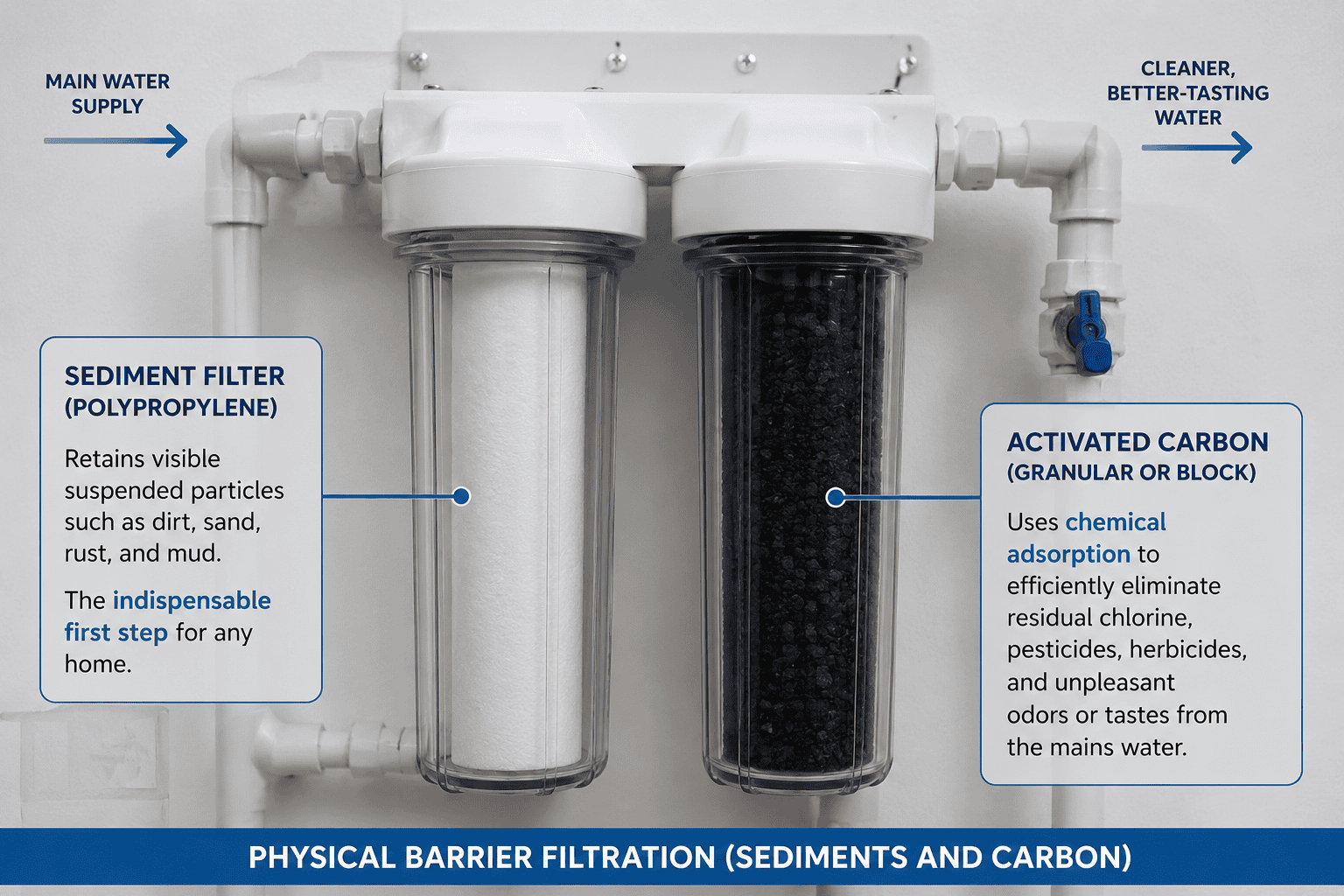
1. Physical Barrier Filtration: Sediment and Carbon
Sediment Filters (Polypropylene): These filters capture visible particles such as dirt, sand, rust, and mud from household water. They provide an essential first filtration stage and protect more advanced treatment systems from sediment buildup. Granular or Block Activated Carbon: Activated carbon uses adsorption to reduce chlorine, pesticides, herbicides, odors, and unpleasant tastes. This filtration method improves water taste and quality before additional purification stages.
2. Advanced Water Purification Technologies
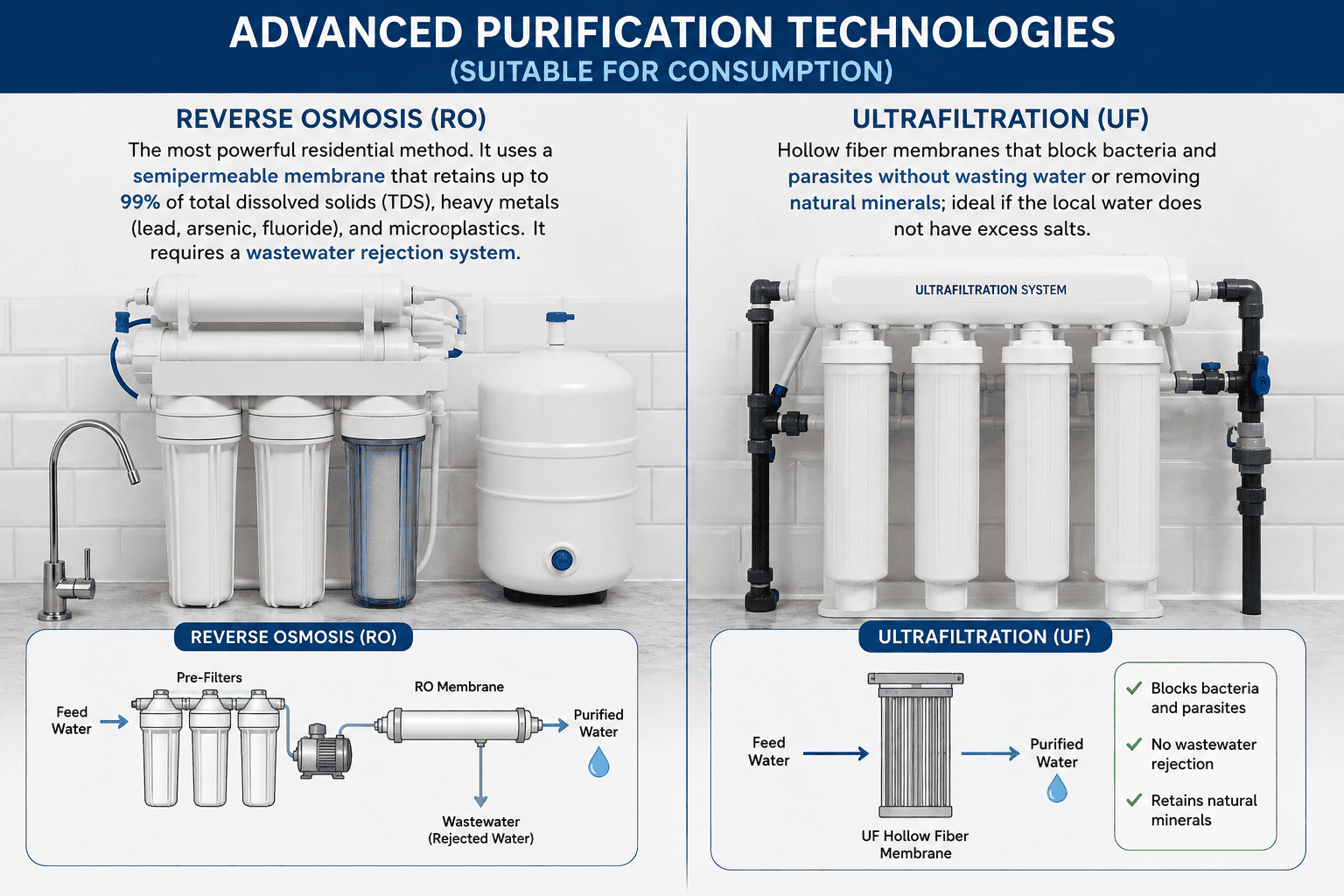
Reverse Osmosis (RO): Reverse osmosis provides advanced residential purification through a highly selective semipermeable membrane. RO systems can reduce total dissolved solids, heavy metals, fluoride, arsenic, lead, and microplastics. Most reverse osmosis systems also produce wastewater during the membrane separation process. Ultrafiltration (UF): Ultrafiltration uses hollow-fiber membranes to block many bacteria, parasites, and suspended particles. UF systems typically operate without producing wastewater and retain most dissolved minerals in the treated water. This technology works well when the local water supply does not contain excessive dissolved salts.
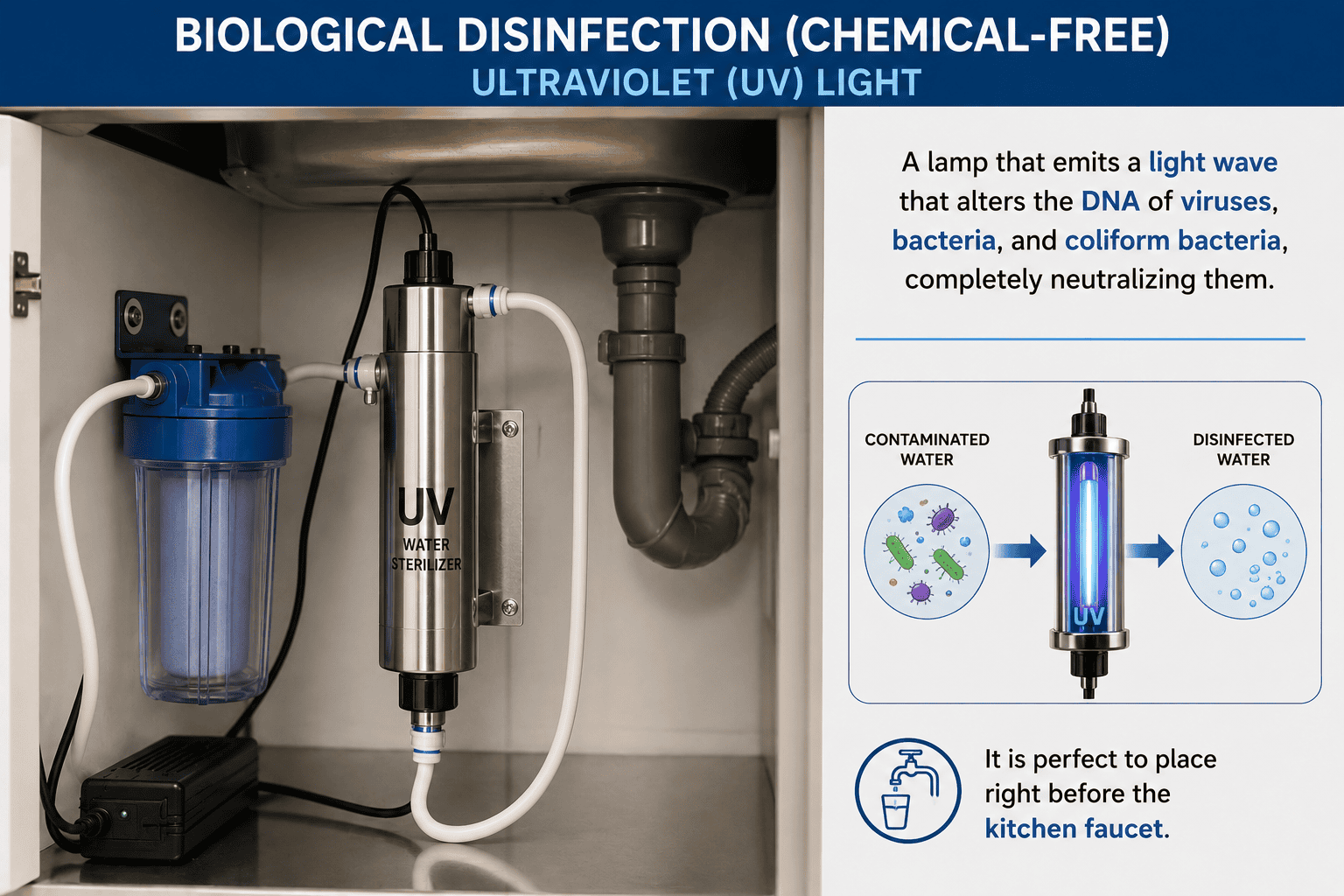
3. Biological Water Disinfection Without Chemicals
Ultraviolet (UV) Light: UV systems expose water to ultraviolet light that disrupts microorganisms and prevents them from reproducing. UV treatment can inactivate bacteria, viruses, and coliform organisms when the system operates under proper conditions. Homeowners often install UV systems near the final point of use, including dedicated kitchen drinking-water lines.
4. Specialized Home Water Treatment
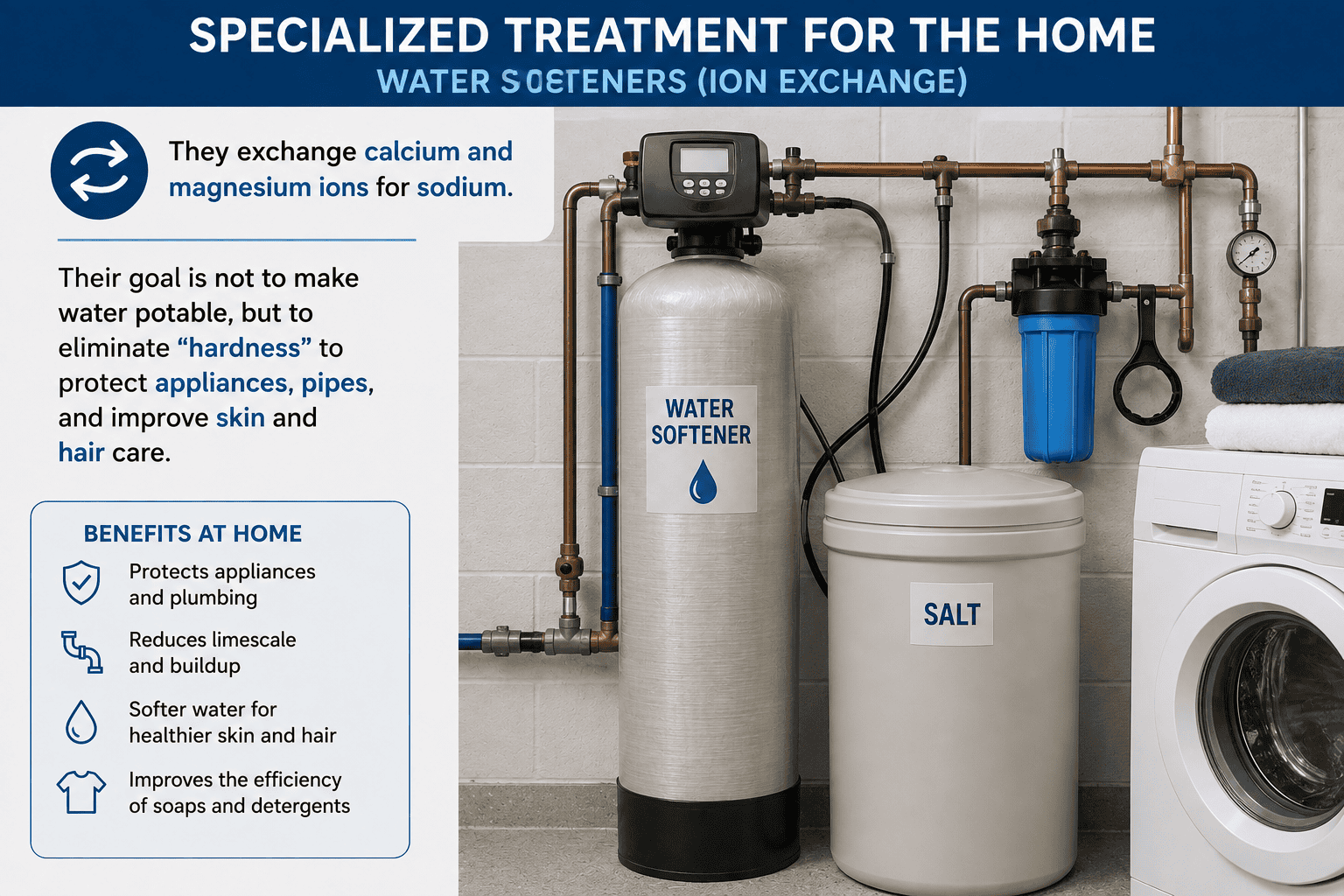
Water Softeners (Ion Exchange): Water softeners exchange calcium and magnesium ions for sodium or potassium ions. This process reduces water hardness but does not primarily serve as a drinking-water purification method. Softened water helps reduce scale buildup inside appliances, plumbing systems, water heaters, and other household equipment. Reducing hardness can also improve soap performance and create a more comfortable experience for skin and hair.
Benefits for Health, Family, and the Planet
1. Direct Impact on Human Health and Well-being
Microbiological safety:
Eliminating pathogens, heavy metals, and chemicals directly prevents gastrointestinal diseases and chronic long-term health risks.
Skin and hair protection: Removing hard minerals and chlorine reduces dermatological irritation, dryness, and conditions like eczema, ensuring softer skin and healthier hair.
2. Economic Savings and Home Infrastructure Lifespan
Household budget optimization:
Generating your own purified resource eliminates the continuous expense of bottled options or heavy commercial jugs.
Plumbing and appliance preservation: Preventing scale buildup extends the operational lifespan of water heaters, washing machines, and dishwashers, lowering maintenance fees.
3. Environmental Conservation and Plastic Reduction
Plastic footprint minimization:
Switching to residential treatment avoids the massive manufacturing and disposal of single-use plastics that pollute oceans and ecosystems.
Carbon footprint reduction: Sourcing clean water at home eliminates the need for fossil-fuel transportation and delivery trucks required to distribute commercial bottled options.